


Day 1
Huay Xai, Luang Namtha
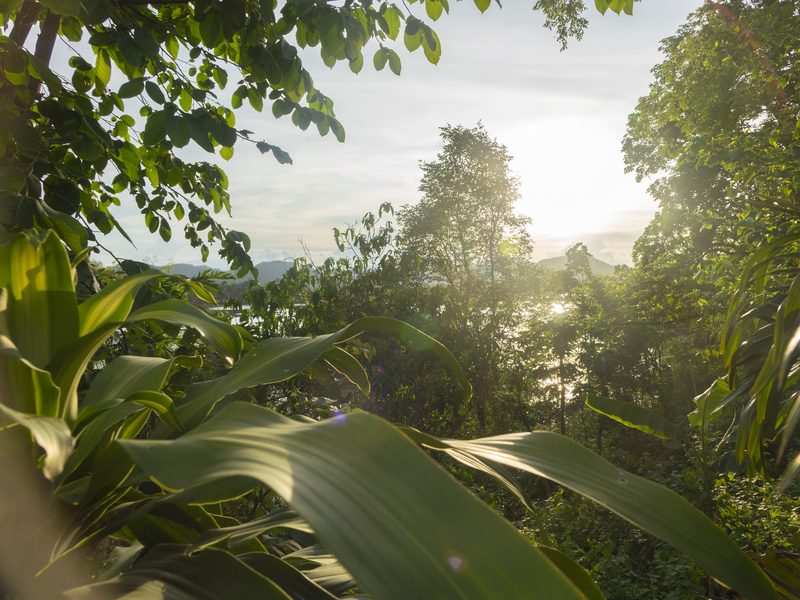
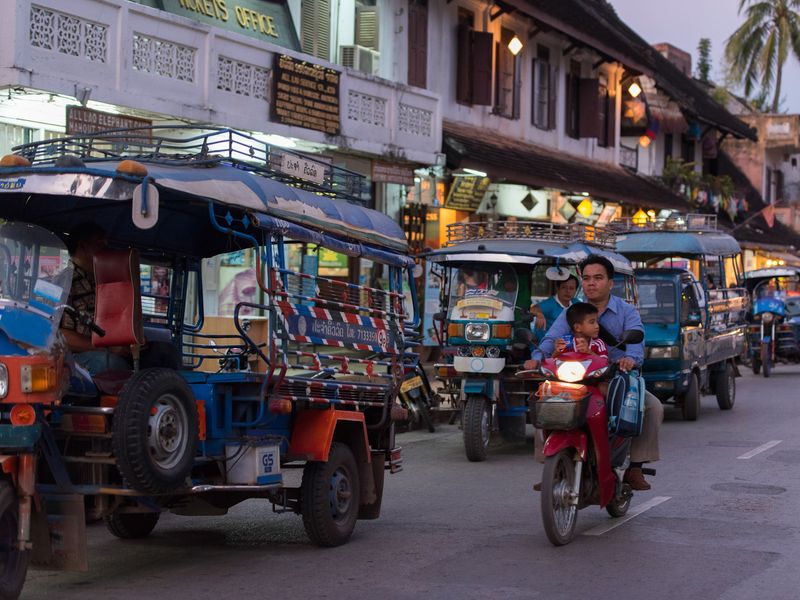
Morning departure from the border town of Huay Xai, on the banks of the Mekong River and overlooking Chiang Khong in Thailand.
Driving east towards Luang Namtha, you’ll be grateful for the recently improved road, making what was once a very arduous journey indeed, a smooth and comfortable drive. En route stop to visit a hill tribe village at Muang Phouka before arriving in Luang Namtha in the late afternoon.
Located on the banks of the River Namtha, the town is surrounded by rugged mountains and beautiful tropical forests. Close to the border with both China and Myanmar, it’s the ideal base for trekking or cycling in this truly unspoilt region of North East Laos.
Overnight in Luang Namtha.
Meals:
(_/_/_)
Day 2
Luang Namtha, Nam Ha National Park Trek
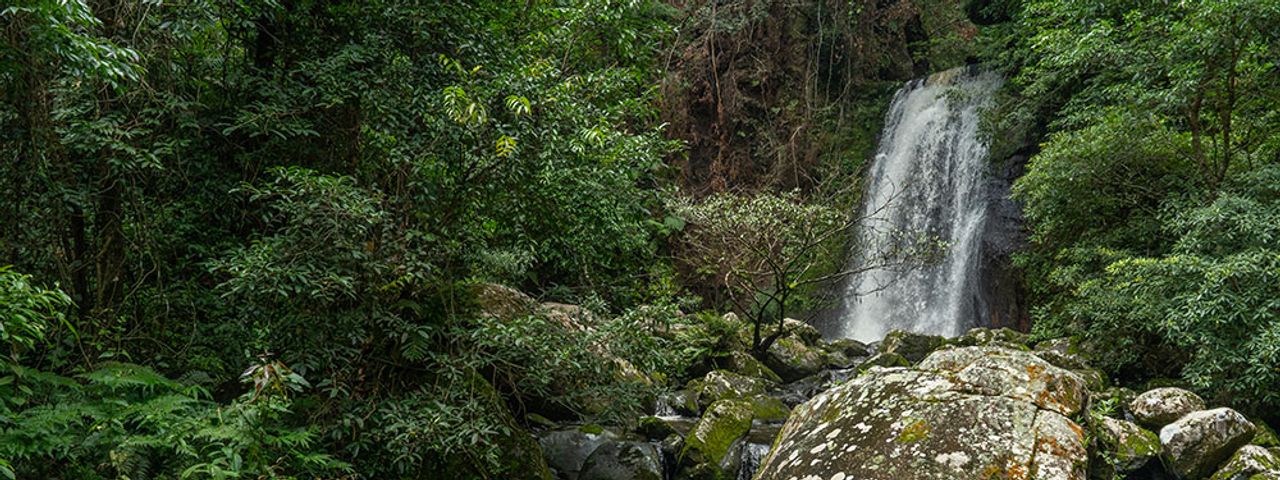
Depart this morning by local Songtaew for a full day in Nam Ha National Park. Commence your day with a climb to Phoumpok Stupa offering panoramic views of Luang Nam Tha town. Head into the jungle with your local guide where you can learn about the different types of medicines and foods which can be collected from the forest.
Break for lunch in the jungle, enjoying some local Akha delicacies before descending to the village of Ban Nammutmai where, thanks to the linguistic skills of your guide, you will be able to meet with the villagers and learn about their way of life. Continue by Songtaew to Ban Nam Jang village and Nam Tha market.
Upon your return to Luang Namtha the remainder of your day is at leisure. The Boatlanding Guesthouse is amongst the finest Eco Lodges in Asia and any stay is both educational and rewarding. The kitchen also serves excellent traditional Lao cuisine!
Overnight in Luang Namtha.
Trekking time/grade:4 hours/moderate
Meals:
(Breakfast/Lunch/_)
Day 3
Luang Namtha
Your day is at leisure.
Overnight in Luang Namtha.
Meals:
(Breakfast/_/_)
Day 4
Luang Namtha, Nong Khiaw
Morning departure for Nong Khiaw, travelling through some dramatic landscape and taking the time to stop and visit the villages of the H’mong and Khmu hill minority tribes before arriving at Nong Khiaw in the late afternoon.
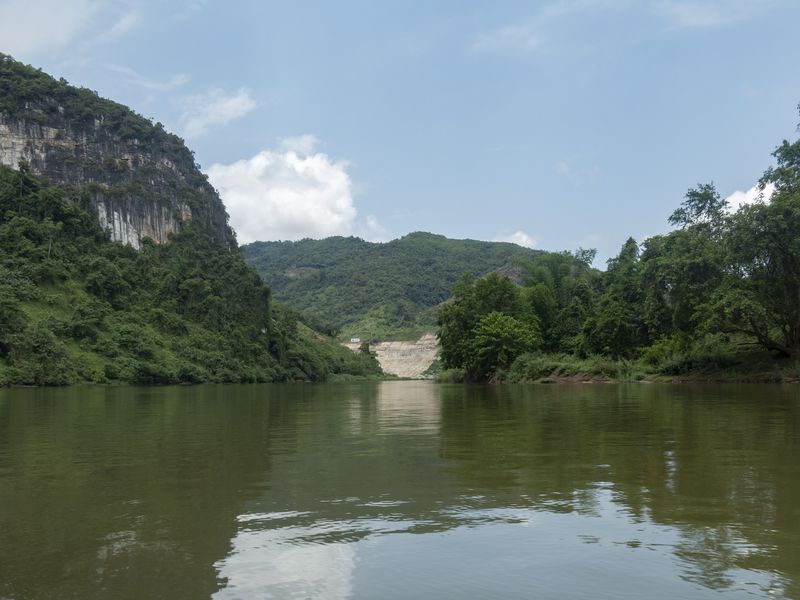
Nong Khiaw is a remote village situated on the banks of the Nam Ou River and flanked on either side by stunning mountainous back-drops. The remainder of your day is at leisure so why not take a stroll along the river bank, wander through local villages, or just settle back with a Beer Lao and wait for the spectacular sunset.
Overnight in Nong Khiaw.
Meals:
(Breakfast/_/_)
Day 5
Nong Khiaw, Muang Ngoi, Ban Houay Boor, Ban Na Trek
Morning departure by boat for the village of Muang Ngoi, only accessible by water. Once a quaint village nestling at the foothills of a giant limestone outcrop, it’s now an ideal place for travellers to take a break whilst travelling up or down the Nam Ou River. Explore the nearby Tham Kang and Tham Pakeo caves, previously used to shelter villagers during the Indochina war.
Continue by foot to Ban Houay Boor, a village of Khmu and T'ai Deng minority tribe’s people, where you will break for lunch at villager's home before trekking on to the T’ai Deng village of Ban Na. After time to explore and, thanks to the multi-lingual skills of your local guides, a chance to meet the villagers and learn about their way of life return to Muang Ngoi. Travel by boat back to Nong Khiaw.
Overnight in Nong Khiaw.
Trekking time/grade:5 hours/easy
Meals:
(Breakfast/Lunch/_)
Day 6
Nong Khiaw, Mekong River Cruise, Luang Prabang
Depart by boat for a journey along the Mekong River to Luang Prabang. Stop en route at the Pak Ou caves, which houses literally hundreds of Buddha statues, hidden from the looting Chinese Haw in times gone by.
Approaching Luang Prabang in the late afternoon, it’s a wonderful way to arrive at this engaging city. The remainder of your day is at leisure.
Luang Prabang, the ‘Jewel of Indochina’, is a UNESCO designated World Heritage Site and regularly voted as one of Asia's premier travel destinations. The ancient royal city is surrounded by mountains and is situated at a junction of the Mekong and Khan rivers.
In the centre of the city is Mount Phousi, rewarding climbers of its 328 steps with stunning views of the surrounding temples and hills. Luang Prabang, a city where time has seemingly stood still, is also an outstanding example of the fusion of traditional Lao architecture with structures built by the European colonial authorities in more recent times. Its unique, remarkably well-preserved townscape illustrates a key stage in the blending of these two distinct cultural traditions.
Overnight in Luang Prabang.
Meals:
(Breakfast/Lunch/Dinner)
Day 7
Luang Prabang, City Tour
Your circuit begins at the former Royal Palace, now the National Museum, continuing on to Wat Mai, a temple renowned for its golden bas-reliefs. During Pimai (the Lao New Year celebrations in April), the Prabang - normally housed in the Royal Palace Museum - is put on public display in this temple. You will then continue on to the most photographed temple in Luang Prabang (quite an accolade!) - Wat Xieng Thong.
Continue on to Wat Visoun, entirely rebuilt after its destruction in 1887 by the invading Black Flags from southern China. In the courtyard of Wat Visoun stands the Watermelon Stupa, which is shaped like the fruit it takes its name from. You will also visit Wat Aham, where you will find the altar of the 'two geniuses of Luang Prabang’ and Wat That, where the ashes of King Sisavang Vong are interred inside the large central stupa.
We have left the late afternoon and evening at leisure, so you get to decide how to spend the remainder of your day. Wander the numerous streets, watch the world go by from one of the many cafes and restaurants in the centre, continue your tour of the temples.
There are plenty of great restaurants to choose from for your evening meal. We also recommend one of the local stalls to be found on the river bank for some truly authentic Lao flavours, washed down with the excellent Beer Lao!
Overnight in Luang Prabang.
Meals:
(Breakfast/_/_)
Day 8
Luang Prabang, Big Brother Mouse, Ban Phadaeng, Teaching & Community Reading Room, Baci Ceremony
Today, few books are available in Laos and they rarely reach the rural villages and the children that need them most. Big Brother Mouse is a locally run project committed to changing this by publishing books that help to make it fun and easy to learn to read. One means of circulating these books is reliant upon visitors to help with their distribution. After an early start your first stop will be a visit to the Big Brother Mouse shop to select some books for the day’s activities.
Depart Luang Prabang, driving for roughly 30km's to the village of Ban Phadaeng, continuing directly to the Community Reading Room at the village's UNICEF funded school. Founded by the inspirational Mr Ken, at the ripe old age of 19 (!), the project provides foreign visitors with the opportunity to teach English to a group of eager primary school children who would otherwise rarely have contact with foreigners.
Class begins at 8.30am and lasts several hours, with a village co-ordinator on hand to assist you throughout. Later in the morning you have the opportunity to partake in some fishing in the nearby river. A local family will prepare lunch, and you can help prepare the meal, and also experience life in typical rural family home in Laos. Following lunch with the family, your guide and village coordinator will show you around the village, which is a mixture of Lao and Hmong ethnic minority before returning to the family house for a traditional Baci Ceremony to wish you luck on your journey ahead.
Return to Luang Prabang in the late afternoon.
Overnight in Luang Prabang.
Meals:
(Breakfast/Lunch/_)
Day 9
Luang Prabang, Pakse, 4000 Islands (Si Phan Don), Wat Phou Temple
Morning transfer to the airport for your flight to Pakse. On arrival you will me met by and transferred by boat towards the 4000 Islands. En route stop to visit the fascinating pre-Angkorian ruins of Wat Phou that are located near to the town and are one of South-East Asia's most dramatically situated temple sites with superb views across the Mekong River.
Designated a World Heritage site by UNESCO in 2001, the site dates back to the 5th century, predating the famous Angkor Wat in Cambodia. Whilst much of the origins of Wat Phou are unclear, it is believed that the original temple was built by the Khmer Hindus who eventually made Angkor Wat their capital.
Taking to the water once again, make the short crossing to the stunning Done Daeng Island, one of the most picturesque islands in this laid-back archipelago. Upon arrival the remainder of your day is at leisure to explore, or just simply relax into the Si Phan Don pace of life!
(Please note: for standard and first class accommodation your hotel is located in Champasak, a small town on the Mekong River with wonderful French Colonial architecture, located 15 minutes by car from Wat Phou).
Overnight in the 4000 Islands.
Meals:
(Breakfast/_/_)
Day 10
4000 Islands
Your day is at leisure.
Overnight in the 4000 Islands.
Meals:
(Breakfast/_/_)
Day 11
4000 Islands, Tomo, Phou Asa
Make a morning visit to the ancient temple of Tomo, originally dating from the 7th century before being rebuilt in the 11th and 12th centuries. The temple is considered to be the female counterpart to the Temple of Shiva at Wat Phou.
Continue on to Phou Asa and the wonderful Kingfisher Eco Lodge, arriving in time for lunch. The remainder of the day is at leisure - there are numerous activities on offer (learn to ride elephants, mountain biking, walking and bird watching to name a few!).
Overnight in Phou Asa.
Meals:
(Breakfast/_/_)
Day 12
Phou Asa
Your day is at leisure – ride, trek or simply kick-back!
Overnight in Phou Asa.
Meals:
(Breakfast/_/_)
Day 13
Phou Asa
Your day is at leisure until your transfer to either Pakse for your onward flight or to the border crossings at either Chong Mek (Thailand) or Don Kralor Cambodia).
Meals:
(Breakfast/_/_)
And there's more - click here
You are within easy striking distance of Cambodia. You can either cross by land at the Don Kralor border, giving you access to the little visited region of Ratanakiri with its wealth of travel interests; alternatively fly from Pakse directly to Siem Reap and the majestic Angkor Temples.
Close
back to top >